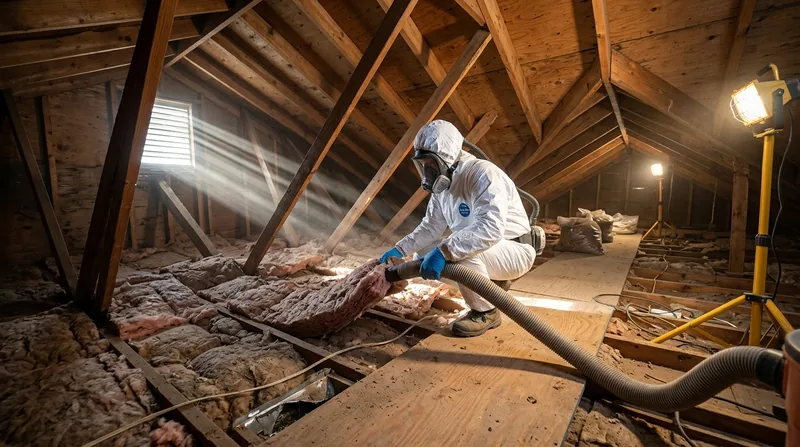




Insulation Removal in Sioux Falls is the first step of every spray foam retrofit across Minnehaha and Lincoln counties. Old fiberglass and cellulose insulation in attics and crawl spaces settles flat after decades of long heating seasons, losing R-value and trapping moisture against roof decks and rim joists. When insulation fails, heat escapes in winter, cooling leaks in summer, and energy bills climb. We remove failed insulation completely before new spray foam goes in, clearing the way for a tight, lasting envelope that actually performs in a 6A climate. Whether your Sioux Falls home was built in 1910 or 1995, settling insulation is the problem we solve first.
Why Insulation Removal Matters in Sioux Falls Attics and Crawl Spaces
The long heating season in Sioux Falls drives moisture outward into attics and wall cavities, and old insulation compresses under that thermal load. Fiberglass that was R-30 when installed in 1985 is R-18 by 2010, and R-12 by now. Cellulose settles even faster, especially in unvented attics where summer heat and humidity accelerate decomposition. A settled attic is also a moisture trap: humid air from the living space rises, condenses in the insulation, and stays there through the heating season because vented attics have no path for that moisture to escape. Removing old insulation is not optional when you install spray foam; it is the foundation of the job. New foam sprayed over settled, damp, or contaminated insulation will fail just as fast as the old material did.
- Settled insulation loses R-value and creates thermal bridges where cold attic air can reach heated rim joists and band joists below.
- Moisture trapped in old fiberglass or cellulose promotes rot in roof decks and rim board, especially in Sioux Falls where the dew point inside the wall is a real concern through the coldest months.
- Contaminated or pest-infested insulation must come out before new foam is installed, or you are just sealing the problem inside the wall.
- A clean substrate ensures spray foam adheres properly and cures to full density, which is where the air seal and the R-value actually come from.
- Removing old insulation also reveals hidden damage to framing, electrical, and roof structure that spray foam would conceal and worsen.
Proper removal protects your investment and ensures the new insulation system will perform for decades in Sioux Falls' challenging climate.
Key info: A postwar ranch in Tea with a vented attic and flattened R-19 fiberglass will gain 10 to 15 R-value points once old insulation is removed and sealed attic spray foam is installed, because the air seal itself stops the stack effect that was pulling heated air up and out through gaps in the original material.
For more on what comes after removal, see our attic spray foam insulation service or learn about insulation replacement and re-insulation across the county.
How We Remove Insulation: A Straightforward Process for Sioux Falls Homes
Removal is not glamorous, but it is essential. We use truck-mounted vacuum systems to extract old insulation from attics and crawl spaces without disturbing the rest of your home. The material is loaded into sealed containers and disposed of according to South Dakota environmental regulations. The substrate is inspected and cleaned before any new work begins. In a typical Sioux Falls attic, the job takes a day; in a crawl space under a full basement, it may take longer depending on access and depth of old material. We work systematically, room by room, and leave the space clean and ready for the spray foam crew.
- We assess the type and condition of existing insulation and identify any moisture, mold, or pest damage that needs attention before removal begins.
- Truck-mounted vacuum extraction removes fiberglass, cellulose, or blown-in material without creating dust or debris in living areas below.
- All removed material is containerized and hauled away, leaving no mess behind and no contamination of the new substrate.
- We inspect the roof deck, rim board, framing, and any electrical or mechanical systems for damage that spray foam will conceal once installed.
- The clean substrate is verified and documented so the spray foam crew can begin work immediately, on schedule and to specification.
This disciplined approach is the difference between a retrofit that lasts and one that fails in five years.
Real example: A 1960s ranch in Harrisburg had R-19 fiberglass in the attic and uninsulated rim joists over a full basement. The homeowner felt cold floors in winter and saw condensation on basement windows. We removed 2,400 board feet of settled fiberglass (about 3 tons), revealed a damaged rim board that needed repair, and left a clean, dry attic ready for 4.5 inches of closed cell foam. The rim joist got 2 inches of closed cell, and the energy bills dropped 18 percent the first winter.
For detailed information on what happens after removal, visit our closed cell spray foam insulation page.
Insulation Removal Methods and Scope
| Approach | Description | Best for |
|---|---|---|
| Attic Vacuum Extraction | Truck-mounted vacuum system removes fiberglass or cellulose from attics through a hose without disturbing living areas or creating interior dust. | Vented and unvented attics in Sioux Falls homes, postwar ranches, and two-story construction where access is from the attic opening. |
| Crawl Space Removal | Selective removal of insulation from band joists, rim board, and floor cavities in crawl spaces, with attention to moisture and ventilation before new foam is installed. | Full basement homes in Sioux Falls with uninsulated or failing rim joists and band joists that need air sealing and thermal control. |
| Wall Cavity Preparation | Removal of old fiberglass or cellulose from wall cavities in pre-1980 homes before injection foam retrofit, with structural verification and moisture assessment. | Early 1900s homes near downtown Sioux Falls and along the Big Sioux River with original wall cavities that were never built for today's heating demands. |
| Partial Top-Up Assessment | Evaluation of existing insulation condition and depth to determine whether removal is needed or a simple blown-in top-up is sufficient and cost-effective. | Sound attics with adequate existing insulation where a modest upgrade is all that is needed, and where removal cost is not justified by the benefit. |
Insulation Removal Cost in Sioux Falls: What to Expect
The cost of insulation removal depends on the size of the space, the type and depth of material, and how easily it can be accessed. A typical attic removal in Sioux Falls runs from $950 to $2,200, depending on whether the attic is a simple ranch layout or a complex two-story with multiple zones. Crawl space removal costs more because access is tighter and the work is slower. A full-basement home in Tea or Brandon with rim joist and band joist material to remove might run $1,500 to $3,000. Wall cavity preparation in an older home requires selective removal and may be quoted separately from the injection foam work itself.
The biggest cost variables are the total square footage of the space, the depth and density of old material (settled cellulose is heavier and slower than fiberglass), and whether there is moisture or contamination that slows the process. A clean, dry attic with uniform 6-inch fiberglass is a fast job. A damp crawl space with mixed material, debris, and tight access is a slow job. We always quote removal separately from the spray foam work so you can see exactly what you are paying for at each stage.
The best way to get an accurate number is to request a free estimate. We will walk the attic or crawl space, measure the square footage, assess the material type and condition, and give you a firm quote with no surprises. Call us at (605) 937-7766 or visit our pricing page for more detail on what drives cost across the county.
What to Look for When Hiring an Insulation Removal Contractor Near Sioux Falls
Not all insulation removal is the same, and the contractor you choose for this work sets the stage for everything that comes after. A good removal contractor leaves the substrate clean, inspects for hidden damage, documents what was removed and why, and coordinates seamlessly with the spray foam crew. A careless one creates dust, misses contamination, and leaves the foam installer with a bad substrate and a bad job. When you are comparing contractors, ask the right questions and verify their credentials and insurance before you sign.
- Verify that the contractor is fully insured and ask to see a certificate of insurance naming you as additional insured; do not accept promises or verbal assurance.
- Get written estimates from at least two contractors that include the square footage of the space, the type of existing insulation, and the disposal method and cost.
- Ask whether the contractor will inspect the substrate and document any damage found before removal begins, and request a written report once the work is complete.
- Confirm that the contractor coordinates with the spray foam crew to ensure the schedule is met and the surface is ready for installation the next day or as planned.
- Check references from recent jobs in Sioux Falls, Tea, or Brandon, and ask specifically about cleanliness, professionalism, and whether the job stayed on schedule and budget.
- Understand the disposal process and confirm that all material is hauled away and disposed of in compliance with South Dakota environmental regulations, not dumped or burned.
A contractor who can answer these questions clearly, provide written documentation, and give you references you can actually call is the one to hire. For a free estimate from a contractor who has been doing this work since 2013, contact us today.
Insulation Removal in Sioux Falls: Pricing Guide
| Service | Price | Details |
|---|---|---|
| Attic Removal (Fiberglass or Cellulose) | Starting at $950 | Includes vacuum extraction, hauling, and substrate inspection; cost scales with attic square footage and material depth |
| Crawl Space or Rim Joist Removal | Starting at $1,200 | Selective removal from band joists and floor cavities; slower access and heavier material increase cost compared to attic work |
| Wall Cavity Preparation (Retrofit) | Starting at $1,500 | Removal of old fiberglass or cellulose from wall cavities in pre-1980 homes before injection foam; quoted separately from foam installation |
| Full-Home Retrofit (Attic Plus Crawl Space) | On estimate | Multi-zone removal across attics and basements requires on-site walk-through to assess access, material type, and total square footage |
| Travel and Scheduling | Included | No separate mileage fee or travel charge within Sioux Falls, Brandon, Tea, Harrisburg, and surrounding Minnehaha and Lincoln counties |
| Free Estimate | Free | Written estimate with square footage, material type, and removal cost; response within 24 hours at (605) 937-7766, no obligation |
Indicative pricing, the exact cost depends on square footage, finish, and site access. Free personalized estimate within 24h at (605) 937-7766.


