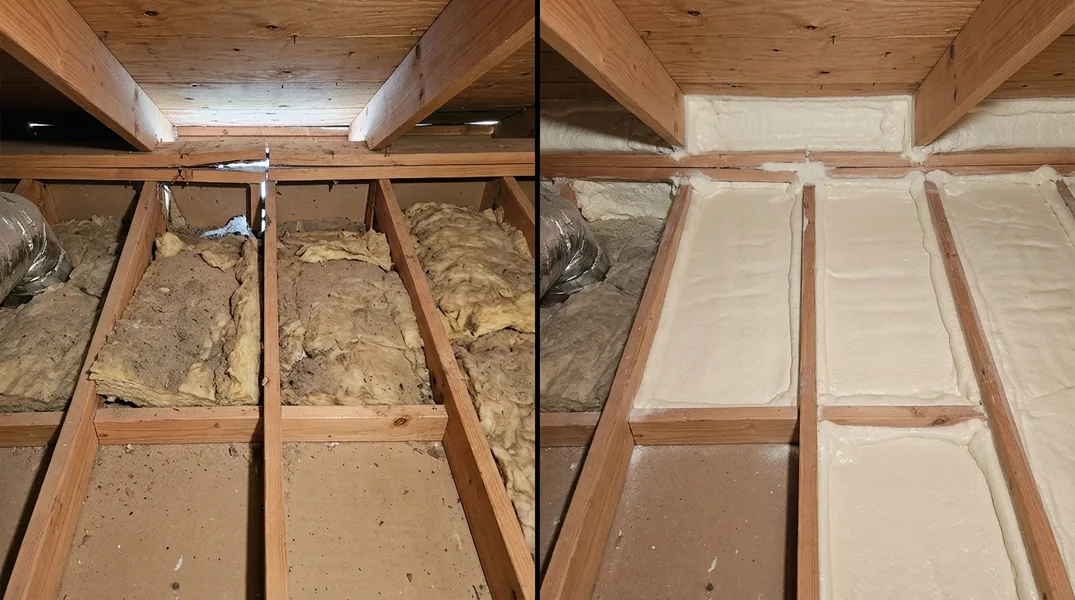
Understanding the Difference: Air Sealing vs. Full Spray Foam
When homeowners in Sioux Falls start thinking about improving their attic insulation, they often face a critical decision: should they invest in air sealing alone, or go all-in with Attic Spray Foam Insulation? The answer depends on your home's current condition, your energy goals, and your budget.
Air sealing focuses on closing gaps, cracks, and penetrations where conditioned air escapes. It's like plugging the leaks in a bucket. A full spray foam job, by contrast, combines air sealing with continuous insulation coverage. Spray foam fills every cavity and crevice while simultaneously blocking air movement. For most Sioux Falls homes, a full foam application delivers superior long-term performance because it addresses both insulation value and air infiltration in one step.
Spray Foam Insulation R Value Per Inch: What You Need to Know
Closed Cell Spray Foam Insulation typically delivers 6.0 to 7.0 R-value per inch, while Open Cell Spray Foam Insulation offers 3.5 to 3.6 R-value per inch. This is significantly higher than traditional fiberglass batts (3.2 to 3.8 per inch) or cellulose (3.2 to 3.8 per inch). The superior R-value per inch is one reason spray foam has become the premium choice for attic insulation in cold climates.
The difference matters because it determines how thick your spray foam needs to be to meet energy codes. A closed cell foam application at 4 inches delivers roughly 24 to 28 R-value, while open cell at the same thickness provides around 14 R-value. Your choice between these two types should factor in your budget, your home's moisture profile, and your target R-value for your climate zone.
R Value Requirements by State: What South Dakota Demands
South Dakota's energy code, which applies to Sioux Falls and surrounding areas, requires attic insulation to meet specific R-value minimums based on the heating degree days in your zone. For most of the Sioux Falls region, the recommended attic insulation R-value is R-49 to R-60, depending on your exact location and the age of your home. This reflects the reality of our cold winters and the energy loss that occurs through the attic.
Meeting these requirements with traditional fiberglass would require 15 to 18 inches of material. With closed cell spray foam, you can achieve R-49 to R-60 in just 7 to 10 inches. This thickness advantage translates to better use of attic space and a more effective thermal barrier. When you're planning an insulation upgrade, confirm the specific R-value requirement for your address, as some areas may have slightly different standards.
How Thick Should Spray Foam Be? Finding the Right Depth for Your Attic
The ideal thickness of spray foam depends on three factors: your target R-value, the type of foam you choose, and your current insulation situation. If you're starting from scratch in a new construction or a home with minimal existing insulation, a 6 to 8 inch closed cell application is typical for Sioux Falls homes. This delivers approximately R-36 to R-48, which covers most energy code requirements and provides excellent air sealing.
If you already have some fiberglass or cellulose in your attic, you may be able to add 4 to 6 inches of open cell foam on top, which is more economical than a full closed cell installation. The key is ensuring that the total R-value meets or exceeds your climate zone's requirement. Thicker isn't always better if it means paying for more than your home actually needs, but undersizing your foam application will leave you with higher heating and cooling costs year-round. A professional assessment can determine the optimal thickness for your specific situation.
Insulation Tax Credit and Rebates: What Sioux Falls Homeowners Can Claim
One of the most overlooked advantages of upgrading to spray foam is the potential for tax credits and energy rebates. The federal government has periodically offered tax credits for home energy improvements, including insulation upgrades. While specific credits change annually, homeowners who invest in qualifying spray foam insulation may be eligible to claim a percentage of their project cost on their federal income tax return. It's worth checking the current IRS guidelines or consulting a tax professional to see what you might recoup.
Beyond federal incentives, many utility companies in South Dakota offer pricing incentives or rebates for energy-efficient home improvements. Some local programs provide direct rebates for attic insulation projects, which can reduce your net cost significantly. Before you finalize your project budget, contact your utility provider and research available state and local programs. These financial incentives can make a full spray foam job more affordable than you initially thought, sometimes reducing your out-of-pocket cost by 10 to 20 percent.
Attic Spray Foam Insulation Cost in Sioux Falls: What to Budget
The cost of Attic Spray Foam Insulation varies based on attic size, foam type, and existing conditions. Closed cell foam typically costs more per square foot than open cell, but delivers higher R-value per inch and better air sealing performance. For a typical 1,500 square foot attic in Sioux Falls, homeowners should budget between $3,000 and $8,000 for a complete spray foam installation, depending on the foam type and thickness chosen.
The best way to understand your actual project cost is to request a free estimate from Sioux Falls Spray Foam Insulation. Our team will evaluate your attic, discuss your energy goals, and provide a transparent quote that breaks down materials and labor. We can also discuss how tax credits and rebates might apply to your project, which often makes the investment more manageable. Call us at (605) 937-7766 to schedule your consultation today.
Making Your Decision: Is Spray Foam Right for Your Home?
If you're torn between air sealing alone and a full spray foam job, consider your long-term plans. Air sealing is a good maintenance step and can improve comfort in the short term, but it doesn't address the insulation value problem. Full spray foam delivers both air sealing and superior R-value in one application, providing better energy efficiency, improved comfort, and protection against moisture and pest infiltration. For most homeowners, the long-term savings on heating and cooling costs justify the upfront investment in spray foam.
The honest truth is that spray foam requires a larger initial investment than traditional insulation, but the performance difference is substantial. You'll notice lower utility bills, more consistent indoor temperatures, and fewer drafts. If you qualify for tax credits or utility rebates, your net cost becomes even more reasonable. Sioux Falls Spray Foam Insulation is ready to help you evaluate your options and find the solution that makes sense for your home and budget. Contact us at (605) 937-7766 or visit our website to learn more about your insulation options.
Looking for a professional spray foam insulation contractor in Sioux Falls? Sioux Falls Spray Foam Insulation responds fast for all your spray foam insulation needs.
Get a Free Quote