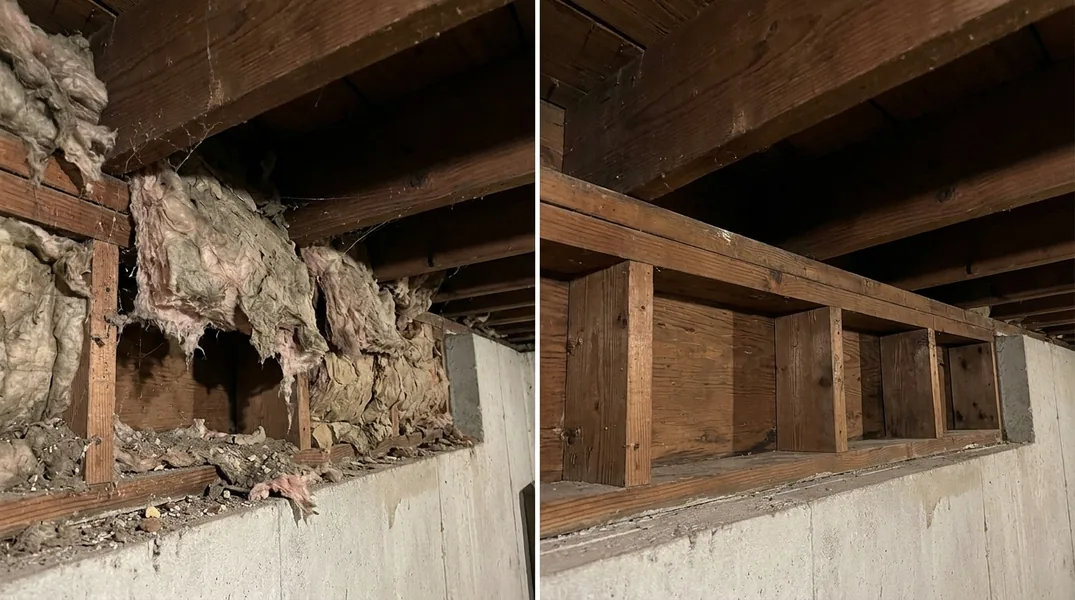
Why Century-Old Homes Need Modern Insulation Solutions
Homes built in the early 1900s near Sioux Falls, particularly in neighborhoods close to McKennan Park and the Big Sioux River, were constructed with charm and character but rarely with energy efficiency in mind. These older properties often feature minimal insulation, air leaks at foundation seams, and deteriorated materials that no longer provide adequate thermal protection. The result is higher heating and cooling costs, inconsistent indoor temperatures, and moisture problems that can compromise structural integrity over time.
The challenge with older homes is that their unique architecture and construction methods require thoughtful retrofit solutions. You cannot simply tear out walls or ceilings without risking damage to original plaster, hardwood floors, or decorative elements that define the home's historical appeal. This is where Attic Spray Foam Insulation becomes an attractive option. Unlike traditional fiberglass batts, spray foam conforms to irregular spaces, fills gaps around wiring and plumbing, and creates an air-tight seal that modern insulation standards demand. For homeowners balancing energy efficiency with preservation, understanding whether spray foam is the right choice requires honest evaluation of both benefits and potential drawbacks.
Is Spray Foam Insulation Worth It for Your Historic Home
The answer depends on your priorities and budget. Spray foam insulation offers undeniable advantages for older properties in Sioux Falls and surrounding areas. First, it delivers superior R-value per inch compared to fiberglass or cellulose, meaning you get better insulation performance in confined attic spaces without adding bulk. Second, its air-sealing properties reduce drafts and moisture infiltration, which are persistent problems in century-old homes. Third, spray foam can last 30 to 80 years with minimal degradation, offering long-term value that justifies the upfront investment.
However, cost is a legitimate consideration. Spray foam typically costs more per square foot than traditional insulation, and the initial expense may seem steep if you are working with a limited budget. The true value emerges over time through reduced energy bills, fewer moisture-related repairs, and improved comfort. For homeowners planning to stay in their historic homes long-term, the return on investment becomes clearer. If you are uncertain whether spray foam aligns with your goals and budget, we encourage you to request a free estimate from Sioux Falls Spray Foam Insulation at (605) 937-7766. Our team can assess your attic, explain options specific to your home's condition, and provide transparent pricing so you can make an informed decision.
Is Spray Foam Insulation Safe: Addressing Common Health Concerns
Safety is a legitimate question, and it deserves a straightforward answer. Spray foam insulation is safe when installed correctly by trained professionals and when proper ventilation protocols are followed during and after application. The two main types used in attics are Open Cell Spray Foam Insulation and Closed Cell Spray Foam Insulation. Open cell foam is less dense and more permeable to moisture vapor, making it suitable for vented attics. Closed cell foam is denser, moisture-resistant, and ideal for creating air barriers in unvented spaces.
During installation, technicians wear protective equipment and ensure adequate ventilation to minimize exposure to isocyanates, the chemical compounds that react to form the foam. Once fully cured (typically 24 to 48 hours), properly installed spray foam is inert and poses no health risk to occupants. The foam does not off-gas harmful chemicals into your living space when applied by insured contractors who follow industry standards. Problems arise primarily when installation is rushed, ventilation is inadequate, or homeowners occupy the space too soon after application. This is why choosing an experienced local contractor matters significantly.
Spray Foam Off-Gassing and Curing: What You Need to Know
Spray foam off-gassing is one of the most misunderstood aspects of this insulation method. Off-gassing refers to the release of volatile organic compounds (VOCs) during and immediately after application. The intensity and duration of off-gassing depend on temperature, humidity, ventilation, and the specific foam formulation used. In a properly ventilated attic with open windows and fans running for 24 to 48 hours post-application, off-gassing is minimal and poses negligible risk to homeowners and their families.
The key to managing off-gassing safely is timing and ventilation. Professional installers at Sioux Falls Spray Foam Insulation ensure attics are well-ventilated during the curing process and advise homeowners to keep living spaces sealed off from work areas. We also recommend that families with young children, elderly members, or respiratory sensitivities discuss timing with us before scheduling work. Most off-gassing occurs in the first 24 hours, and levels drop significantly by day three. Once fully cured, the foam is chemically stable and does not continue to release harmful substances. This is fundamentally different from some other materials that off-gas continuously over months or years.
Spray Foam Insulation Problems and Cons: An Honest Assessment
No insulation material is perfect, and spray foam is no exception. Common problems include improper installation leading to uneven coverage, over-application that restricts attic ventilation, and inadequate air sealing that defeats the purpose of the foam. If contractors do not account for proper ventilation in vented attics, moisture can become trapped, leading to mold growth or wood rot. Additionally, some homeowners report difficulty finding contractors experienced with foam removal if future attic access or modifications are needed. Cost remains a barrier for budget-conscious homeowners, and some insurance companies have raised questions about foam in certain applications, though this concern has largely diminished as the industry has matured.
Another consideration is that spray foam, once applied, is permanent. Unlike fiberglass batts that can be pulled out and replaced, foam removal requires specialized equipment and expertise. This permanence is an advantage if you are confident in your decision but a drawback if you anticipate major attic modifications. Additionally, while spray foam itself is non-flammable, it must be covered with a fire-rated barrier in attics to meet building codes. Finally, not all foam products are created equal. Cheaper, lower-density foams may not deliver the promised R-value or durability. Choosing a reputable contractor who uses quality materials and follows best practices is essential to avoiding these pitfalls.
Spray Foam Insulation Pros and Cons: Making Your Decision
To help you weigh your options, here is a balanced summary of the primary advantages and disadvantages. The pros include superior air-sealing performance that reduces drafts and energy costs, excellent R-value in confined spaces, long-term durability, moisture resistance (especially with closed cell foam), and the ability to fill irregular cavities and gaps that other insulations cannot reach. For older homes near McKennan Park and throughout Sioux Falls, these benefits often justify the investment, particularly if the home has suffered from persistent moisture or comfort issues.
The cons include higher upfront cost compared to fiberglass or cellulose, potential off-gassing concerns if installed improperly, difficulty with future modifications, the need for professional installation, and the requirement for a fire-rated covering in attics. Some homeowners also express concern about the permanence of the material and the environmental impact of foam production, though modern formulations are increasingly eco-friendly. The best approach is to evaluate your specific situation. If your century-old home has significant air leaks, moisture problems, or high energy bills, spray foam is likely worth the investment. If your attic is in reasonable condition and you are primarily seeking basic insulation improvement, traditional materials might suffice. Contact Sioux Falls Spray Foam Insulation at (605) 937-7766 to discuss your home's unique needs and receive personalized recommendations.
Next Steps: Getting Professional Guidance for Your Historic Home
Making the decision to insulate your century-old home is significant, and you should not do it alone. Sioux Falls Spray Foam Insulation has extensive experience working with older properties throughout the region, understanding the unique challenges they present and the solutions that work best. Our team can inspect your attic, assess moisture levels, evaluate existing insulation, and recommend whether spray foam, Wall & Injection Foam Insulation, or a hybrid approach makes sense for your home.
We are committed to transparency about both the benefits and limitations of spray foam insulation, ensuring you understand exactly what to expect before work begins. We follow industry best practices for ventilation, curing, and safety, and we use only high-quality foam products backed by manufacturer warranties. Whether your home is near the Big Sioux River, McKennan Park, or anywhere else in Sioux Falls, we are ready to help. Schedule your free estimate today by calling (605) 937-7766 or visiting our website at https://sioux-falls-spray-foam.com. Let us help you make an informed decision that keeps your historic home comfortable, efficient, and protected for decades to come.
Looking for a professional spray foam insulation contractor in Sioux Falls? Sioux Falls Spray Foam Insulation responds fast for all your spray foam insulation needs.
Get a Free Quote