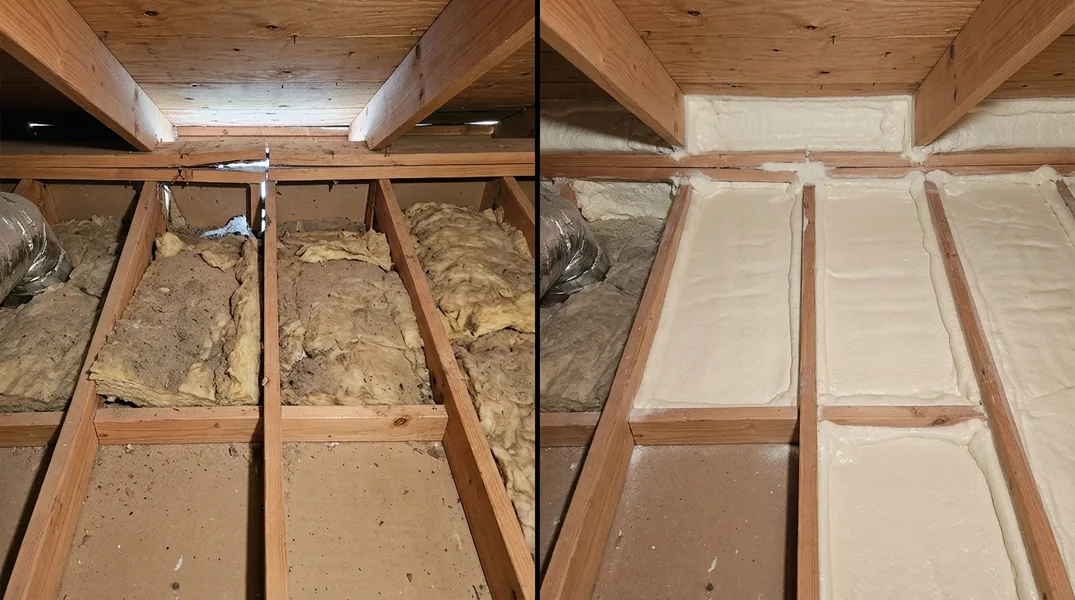
Understanding Spray Foam Attic Insulation: Open Cell vs Closed Cell
Attic spray foam insulation has become one of the most popular choices for homeowners in Sioux Falls looking to improve energy efficiency and comfort. However, not all spray foam is created equal. The two primary types, open cell and closed cell, offer distinct advantages and trade-offs that can significantly impact your home's performance and your wallet. Understanding the differences between these two options is essential for making an informed decision about which one suits your specific needs.
Open cell and closed cell spray foam differ fundamentally in their structure and how they're manufactured. Open cell foam has a more porous structure, meaning the cells are not completely sealed. This allows air and moisture to pass through the material more easily. Closed cell foam, by contrast, has tightly sealed cells that create a nearly impermeable barrier. These structural differences lead to variations in R-value (insulating power), moisture resistance, expansion rates, and cost. For homeowners in Sioux Falls, where winters are harsh and humidity levels can fluctuate, choosing the right type of foam can make a real difference in comfort and energy bills.
Open Cell Spray Foam Insulation: Benefits and Drawbacks
Open Cell Spray Foam Insulation is lighter, more flexible, and generally more affordable than its closed cell counterpart. With an R-value of approximately 3.5 to 3.6 per inch, open cell foam provides solid insulation performance while remaining cost-effective. Because the cells are not fully sealed, the foam is more compressible and can flex slightly with the structural movement of your home. This flexibility makes it an excellent choice for attics where some movement is expected and can help prevent cracking or separation over time.
One significant advantage of open cell foam is its sound-dampening properties. The porous nature of the material absorbs sound waves effectively, making it ideal for homeowners who want to reduce noise transmission through their attic. Additionally, open cell foam allows moisture vapor to pass through, which can be beneficial in certain applications where breathability is desired. However, this same characteristic means open cell foam is not ideal as a moisture barrier. If your attic experiences condensation issues or if you're concerned about moisture infiltration, open cell foam may require additional vapor barriers or ventilation considerations. The lower density also means it offers less structural support and wind resistance than closed cell alternatives.
Closed Cell Spray Foam Insulation: Superior Protection and Performance
Closed Cell Spray Foam Insulation is the premium choice for homeowners seeking maximum insulation value and moisture protection. With an R-value of 6 to 7 per inch, closed cell foam provides nearly double the insulating power of open cell foam. This superior R-value means you need less material to achieve the same level of insulation, which can be advantageous in attics where space is limited or where you want to maximize thermal resistance in a thinner application.
The sealed cell structure of closed cell foam creates an excellent air and moisture barrier, making it ideal for sealed attic insulation applications. This barrier property prevents moisture infiltration and condensation buildup, which is particularly valuable in cold climates like Sioux Falls where temperature differentials between inside and outside can be extreme. Closed cell foam also provides structural reinforcement to your roof deck and can increase the rigidity of your attic structure. The higher density and strength make it more resistant to wind uplift and external pressures. The primary trade-off is cost, as closed cell foam typically runs 20 to 40 percent higher than open cell options. Additionally, closed cell foam is less flexible and may crack if significant structural movement occurs.
Which Type Is Best for Sioux Falls Homes: Climate Considerations
The climate in Sioux Falls presents specific challenges that should influence your spray foam choice. With average winter temperatures dropping well below freezing and significant seasonal temperature swings, your attic experiences considerable thermal stress. The extreme cold means that any air leaks or thermal bridges in your attic can lead to substantial heat loss and higher energy bills. Additionally, the temperature differential between your heated interior and the cold exterior creates moisture condensation risks, especially in poorly ventilated or inadequately insulated attics.
For most Sioux Falls homeowners, closed cell spray foam insulation offers superior performance in this climate because it provides both exceptional R-value and a complete moisture barrier. This combination helps prevent the condensation issues that can plague attics in cold climates and maximizes energy efficiency during brutal winters. However, if budget is a primary concern and your attic is well-ventilated with no moisture problems, open cell foam can still provide adequate performance. The decision ultimately depends on your specific attic conditions, your long-term energy goals, and your budget. An free estimate from Sioux Falls Spray Foam Insulation can help you evaluate your particular situation and determine the best approach for your home.
Attic Spray Foam Insulation Cost in Sioux Falls: What to Budget
Understanding the cost differences between open and closed cell spray foam is essential for budgeting your insulation project. Open cell spray foam typically costs between $0.50 and $1.00 per board foot, making it the more economical choice upfront. For a typical 1,500-square-foot attic, you might expect to invest between $2,000 and $4,000 for open cell foam installation. Closed cell spray foam, due to its superior R-value and moisture protection, generally runs between $1.00 and $2.00 per board foot, with typical attic projects ranging from $4,000 to $8,000 or more, depending on the depth of application and your specific attic configuration.
While closed cell foam carries a higher initial investment, many homeowners find the long-term energy savings justify the premium. Because closed cell foam delivers roughly twice the insulating power per inch, you may achieve your target R-value with a thinner application, potentially offsetting some material costs. Additionally, the superior moisture protection and durability of closed cell foam can extend the life of your roof structure and prevent costly moisture-related damage down the line. For accurate pricing tailored to your home and specific needs, contact Sioux Falls Spray Foam Insulation at (605) 937-7766 or request a free estimate today. Our team will assess your attic and provide transparent, competitive quotes for both options.
Unvented Attic Spray Foam: Creating a Sealed, Conditioned Space
Unvented attic spray foam applications represent a modern approach to attic insulation that's gaining popularity among homeowners seeking maximum efficiency and comfort. In an unvented attic system, spray foam is applied directly to the underside of the roof deck, creating what's called a conditioned attic. This approach makes the attic part of your home's thermal envelope rather than a separate, unconditioned space. The result is more consistent temperatures throughout your home, reduced HVAC strain, and often improved indoor air quality since the attic is no longer exposed to outside air infiltration.
Closed cell foam is the preferred choice for unvented attic applications because it provides the air sealing and moisture barrier necessary for this type of system. When applied properly, closed cell foam creates an unvented attic spray foam installation that eliminates the need for attic ventilation while preventing moisture accumulation. This is particularly beneficial in cold climates like Sioux Falls, where traditional vented attics can suffer from ice dams, condensation, and energy loss. Open cell foam can be used in unvented applications but requires careful attention to vapor barriers and may not provide the same level of moisture protection. If you're considering an unvented attic system for your Sioux Falls home, our experienced team can help you understand whether this approach makes sense for your property and budget.
Looking for a professional spray foam insulation contractor in Sioux Falls? Sioux Falls Spray Foam Insulation responds fast for all your spray foam insulation needs.
Get a Free Quote