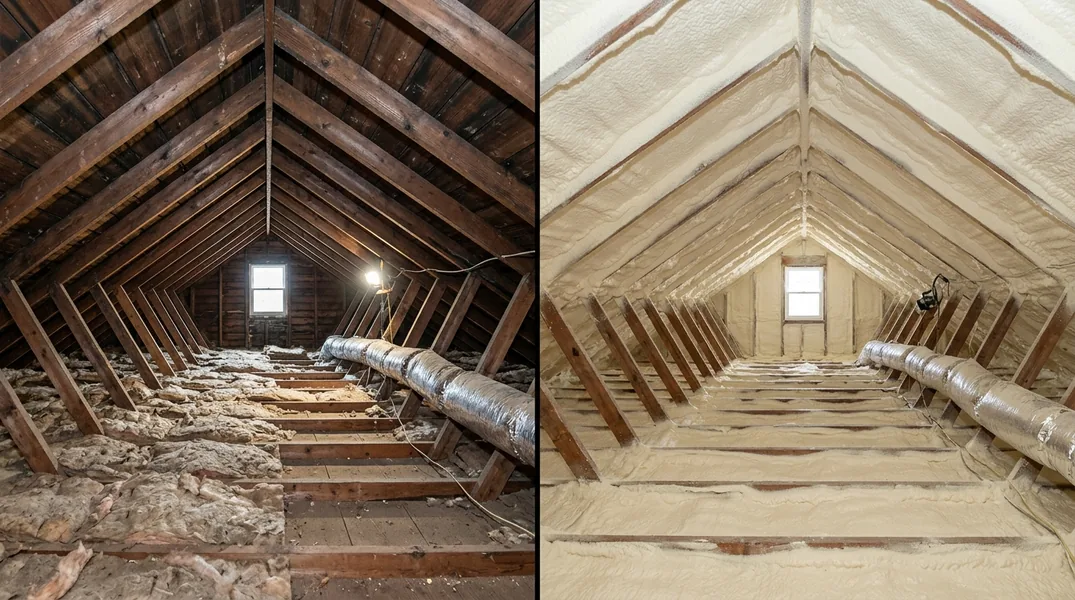
Understanding Spray Foam Insulation Pricing in Sioux Falls
When homeowners in Sioux Falls start researching pricing for insulation upgrades, spray foam often emerges as a top consideration. Unlike traditional fiberglass or cellulose, spray foam insulation offers superior R-value performance and air sealing capabilities, which justifies its higher upfront investment. The cost of spray foam installation depends on several factors including the type of foam, the area being insulated, local labor rates, and the complexity of the job.
In 2026, Attic Spray Foam Insulation projects in the Sioux Falls region typically range from $1,500 to $4,500 for a standard residential attic, depending on square footage and foam type. The investment protects your home from energy loss, reduces utility bills, and addresses moisture problems that plague many older homes in the region. Understanding what drives these costs helps you make an informed decision about whether spray foam is right for your property.
Prefer a number before the details? Get your instant ballpark range in 20 seconds, then read on for what moves it.
Closed Cell Spray Foam vs. Open Cell: Cost and Performance Differences
Closed Cell Spray Foam Insulation and Open Cell Spray Foam Insulation represent two distinct approaches to attic insulation, each with different cost structures and performance profiles. Closed cell foam is denser, more rigid, and provides a superior Sioux Falls spray foam moisture barrier that actively resists water intrusion and vapor transmission. This makes it the preferred choice for homeowners dealing with moisture infiltration or those who want maximum thermal protection per inch of material.
Open cell foam, by contrast, is lighter, more flexible, and less expensive to install. It typically costs 30 to 40 percent less than closed cell options but offers a lower R-value per inch and does not function as an effective vapor barrier on its own. For attics in the Midwest where temperature fluctuations and seasonal moisture changes are common, closed cell spray foam often delivers better long-term value despite the higher initial investment. The choice between the two should reflect your specific priorities: maximum moisture protection and energy efficiency (closed cell) or budget-conscious insulation with adequate performance (open cell).
Attic Moisture Problems and How Spray Foam Solves Them
Sioux Falls homeowners frequently encounter condensation in attic spaces, a problem that worsens during winter months when warm interior air meets cold roof surfaces. Traditional insulation materials like fiberglass batts do not stop air leakage or moisture vapor, meaning warm, humid air can infiltrate the attic and condense on cold surfaces. This creates an ideal environment for mold growth, wood rot, and structural damage that can cost thousands to repair.
Spray foam insulation addresses attic moisture problems by sealing air leaks and, in the case of closed cell foam, providing a vapor barrier that restricts moisture transmission. When spray foam is applied to the underside of roof decking or around penetrations, it creates an airtight envelope that prevents warm interior air from entering the attic cavity. This eliminates the temperature differential that causes condensation, protecting your roof structure and extending the lifespan of your home's envelope. Many homeowners are surprised to learn that a proper spray foam installation can prevent thousands in future water damage and mold remediation costs.
The Role of Vapor Barriers in Attic Insulation Strategy
A vapor barrier is a critical component of any modern attic insulation system, particularly in cold climates where seasonal moisture changes are pronounced. Traditional vapor barriers were thin plastic sheets installed on the warm side of insulation, but they are often improperly installed or damaged, reducing their effectiveness. Closed cell spray foam eliminates this concern by functioning as an integral vapor barrier that cannot be punctured, shifted, or compromised during installation or over time.
The science behind vapor barrier placement is straightforward: moisture should be prevented from entering the attic from below, where it originates from living spaces. Spray foam accomplishes this while simultaneously providing thermal resistance and air sealing. In humid climates or homes with significant moisture sources (kitchens, bathrooms, laundry rooms), the vapor barrier properties of closed cell foam become even more valuable. This dual functionality makes spray foam a more comprehensive solution than traditional insulation paired with a separate vapor barrier, justifying its higher cost for homeowners who want peace of mind and long-term protection.
Attic Spray Foam Insulation Cost in Sioux Falls: What to Budget
Breaking down the actual costs helps homeowners understand where their investment goes. Labor typically comprises 50 to 60 percent of the total project cost, while materials account for the remainder. In the Sioux Falls area, closed cell spray foam costs approximately $1.50 to $2.50 per board foot, while open cell foam ranges from $0.90 to $1.50 per board foot. For a 1,500-square-foot attic with an average depth of 6 inches, you would need roughly 750 board feet of material, translating to $1,125 to $1,875 in materials alone for closed cell or $675 to $1,125 for open cell.
Additional factors that influence your final bill include roof complexity, the presence of existing insulation that must be removed, accessibility challenges, and local permit requirements. Some homes require additional ventilation modifications or structural prep work before foam application, which adds to the timeline and cost. The best way to understand your specific budget is to request a free estimate from Sioux Falls Spray Foam Insulation. Our team will assess your attic, discuss your moisture and energy concerns, and provide a transparent quote that reflects the true scope of your project.
Why Professional Installation Matters for Long-Term Results
Spray foam insulation is not a DIY project. The application requires specialized equipment, proper safety protocols, and trained technicians who understand how foam cures, expands, and performs in different environmental conditions. Poor installation can result in incomplete coverage, inadequate vapor barrier function, or foam that does not cure properly, all of which compromise the performance and longevity of your investment. Professional installers in Sioux Falls are familiar with local climate challenges and building codes, ensuring your installation meets all requirements and performs optimally in our region's temperature and humidity patterns.
When you choose Sioux Falls Spray Foam Insulation, you benefit from years of experience addressing the specific moisture and insulation challenges that affect homes throughout our service area. Our technicians understand how to identify and seal the air leaks that allow condensation in attic spaces and can recommend the right foam type for your situation. Whether you need Attic Spray Foam Insulation, Wall & Injection Foam Insulation, or a combination approach, professional installation ensures you get the performance and protection your home deserves. Call us today at (605) 937-7766 to discuss your project and learn how spray foam can transform your home's energy efficiency and comfort.
Before you call, get your instant ballpark range in 20 seconds so you start the conversation already knowing roughly what your job should cost.
Looking for a professional spray foam insulation contractor in Sioux Falls? Sioux Falls Spray Foam Insulation responds fast for all your spray foam insulation needs.
Get a Free Quote