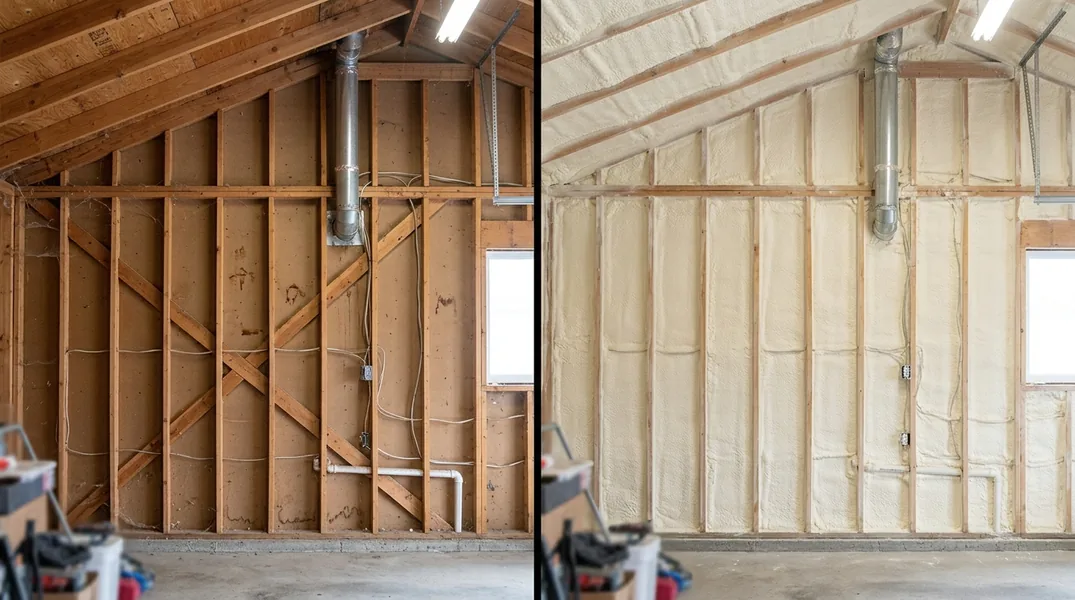
Understanding Open Cell vs Closed Cell Spray Foam
When you're planning an Attic Spray Foam Insulation project for your Sioux Falls home, one of the most important decisions you'll face is choosing between open cell and closed cell spray foam. These two types of insulation work differently and offer distinct advantages depending on your home's needs, budget, and climate conditions. Understanding the fundamental differences will help you make an informed choice that protects your investment and keeps your home comfortable year-round.
Open Cell Spray Foam Insulation is a lighter, more flexible material that allows air and moisture to pass through its cellular structure. Think of it like a sponge with interconnected pores. Closed Cell Spray Foam Insulation, by contrast, features tightly packed cells that are completely sealed off from one another, creating a denser, more rigid barrier. This structural difference affects everything from how the foam performs in your attic to how much you'll pay upfront and over time.
Open Cell Spray Foam: Benefits and Considerations
Open cell spray foam has become increasingly popular among homeowners in Sioux Falls because it offers an excellent balance of performance and affordability. The lower density of open cell foam means it costs less per board foot than closed cell alternatives, making it an attractive option for budget-conscious homeowners. Additionally, open cell foam is lighter and easier to handle during installation, which can reduce labor costs. The material also provides good sound dampening properties, making it ideal if you're concerned about noise transmission between rooms or from outside.
One significant advantage of open cell spray foam is its breathability. Because the cells are interconnected, the material allows moisture vapor to pass through, which can be beneficial in certain applications. However, this same characteristic means open cell foam offers less resistance to air infiltration compared to closed cell options. If moisture control is a primary concern in your attic, you may need to pair open cell foam with a vapor barrier. The spray foam R value for open cell typically ranges from 3.5 to 3.8 per inch, which is respectable but lower than what closed cell can achieve.
Closed Cell Spray Foam: Superior Performance and Protection
Closed Cell Spray Foam Insulation is the premium option for homeowners who want maximum insulation performance and comprehensive moisture protection. The closed cell spray foam R value ranges from 6.0 to 7.0 per inch, which is significantly higher than open cell. This means you need less thickness to achieve the same insulation value, which can be an important consideration in attics with limited space. The superior R-value makes closed cell foam particularly valuable in cold climates like Sioux Falls, where winter temperatures can drop well below freezing.
Beyond thermal insulation, closed cell spray foam provides an impermeable air and moisture barrier. This dense structure prevents water vapor from penetrating the foam, which protects your attic framing and roof deck from moisture damage and mold growth. Closed cell foam also adds structural rigidity to your roof or walls, which can improve the overall integrity of your home. While the upfront cost is higher, many homeowners find that the long-term benefits, including superior energy efficiency and protection against moisture-related damage, justify the investment. The material is also more durable and has a longer lifespan than open cell alternatives.
Spray Foam R Value: What You Need to Know
The R-value is one of the most critical metrics when evaluating any insulation product, and it's essential to understand what this number actually means for your home. R-value measures thermal resistance, or how effectively a material slows heat transfer. The higher the R-value, the better the insulation performance. For attic insulation in Sioux Falls, most building codes and energy efficiency standards recommend an R-value between R-38 and R-60, depending on your specific location and heating system.
When comparing open cell versus closed cell spray foam, the R-value difference is substantial. Open cell spray foam typically provides an R-value of 3.5 to 3.8 per inch of thickness, meaning you'd need approximately 12 to 17 inches of material to achieve an R-50 rating. Closed cell spray foam, with its closed cell spray foam R value of 6.0 to 7.0 per inch, would require only 7 to 9 inches to reach the same R-50 performance. In an attic with limited clearance, this difference can be the deciding factor. Additionally, closed cell foam's superior R-value means better energy efficiency, which translates to lower heating and cooling costs throughout the year. When you're evaluating pricing for your project, remember that while closed cell costs more per board foot, you may actually spend less overall because you need less material to achieve your target R-value.
Attic Spray Foam Insulation Cost in Sioux Falls: What to Budget
Cost is always a significant consideration when planning an insulation upgrade, and spray foam pricing varies based on several factors including the type of foam, your attic size, and current insulation conditions. Open cell spray foam typically costs between $0.50 and $1.50 per board foot, while closed cell spray foam ranges from $1.00 to $3.00 or more per board foot. For a typical attic project in Sioux Falls, you might spend anywhere from $2,000 to $8,000 depending on whether you choose open or closed cell and how much coverage you need.
Beyond the material cost, labor, equipment, and site preparation all factor into your final bill. A professional installation ensures proper application, which is critical for achieving the R-value ratings and performance guarantees that manufacturers promise. Rather than comparing prices in isolation, focus on the overall value and long-term benefits. Many homeowners recoup their spray foam investment through reduced energy bills within 5 to 10 years, especially if they upgrade from older, less effective insulation. To understand what your specific project will cost, reach out to Sioux Falls Spray Foam Insulation for a free estimate or call (605) 937-7766. We'll assess your attic, discuss your goals, and provide a transparent quote that breaks down all costs.
Making Your Decision: Which Spray Foam Is Right for Your Home
Choosing between open cell and closed cell spray foam ultimately depends on your priorities, budget, and your home's specific conditions. If energy efficiency and maximum protection against moisture are your top concerns, closed cell spray foam is the superior choice despite its higher upfront cost. It's particularly well-suited for attics in cold climates like Sioux Falls, where thermal performance is critical and moisture management can prevent costly damage to your roof structure.
If you're working with a tighter budget and your primary goal is improving insulation performance without major structural concerns, open cell spray foam offers good value and adequate performance for many applications. Some homeowners also prefer open cell for its environmental profile, as it typically contains fewer blowing agents that impact the environment. Before making your final decision, consider having a professional energy audit conducted on your home. This assessment can identify air leaks, moisture issues, and insulation gaps that will inform whether open or closed cell foam is the better investment for your situation. Contact Sioux Falls Spray Foam Insulation today at (605) 937-7766 or request a free estimate to discuss which option aligns with your home's needs and your budget.
Looking for a professional spray foam insulation contractor in Sioux Falls? Sioux Falls Spray Foam Insulation responds fast for all your spray foam insulation needs.
Get a Free Quote